Dinosaur dig site
Bury plastic fossils in a sandpit and let young palaeontologists dig them up with brushes and goggles.
- Guests
- 6-12 children
- Party length
- 2 hours
- Prep time
- 2-3 hours, plus shopping
- Ages
- 3-7
What it is
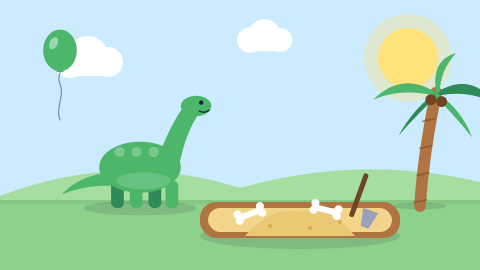
Children become palaeontologists for the afternoon. A sandpit (or a paddling pool filled with play sand) becomes a dig site hiding toy dinosaurs and plaster “fossils”. Kids excavate them with brushes, take them to a “lab” to identify them, and keep what they find. It is cheap, works for a wide age range and needs very little supervision once it starts.
Plan ahead
- Two weeks before: send invitations styled as “expedition orders” asking guests to wear clothes that can get sandy.
- One week before: buy play sand (allow roughly 25kg per paddling pool), a pack of 30-50 small plastic dinosaurs, plastic eggs and a fossil dig kit or two.
- Two days before: make the ice eggs. Put a small dinosaur inside a balloon, fill with water, tie and freeze. Make more than you need, as some will crack.
- The day before: print dig licences (a card with the child’s name, a photo box and spaces for stamps) and a simple dinosaur identification chart.
Set the scene
Use a sandpit, a paddling pool or a large storage box filled with sand. Rope it off with yellow “caution” tape and stick a sign on it: “Excavation zone - authorised palaeontologists only”. Bury the dinosaurs at different depths so younger kids find some easily. Set a folding table nearby as the fossil lab with trays, magnifying glasses and the ID chart. Green balloons, palm leaves and a few large toy dinosaurs make the garden feel like the Jurassic.
Activities
The big dig
Give each child a soft paintbrush, a plastic spoon and a bucket. Explain the rules: no throwing sand, brush gently “so the fossil doesn’t break”, and each person can keep up to five finds. Rotate groups every 8-10 minutes so everyone gets a go. Top the pit back up with hidden dinosaurs between groups.
Fossil lab
Kids lay out their finds, use magnifying glasses to match each one to the chart, and get a stamp on their licence for each species. Older children can measure their dinosaurs with a ruler and record it.
Ice egg rescue
Peel the balloon off each frozen egg and put them in a tray. Give children cups of warm water, pipettes and salt. Whoever frees their dinosaur first wins, but everyone keeps theirs.
Food and drink
- “Dino nuggets” (dinosaur-shaped chicken nuggets) and “fossil” sandwiches cut with cookie cutters
- Veggie sticks in a pot labelled “herbivore snacks”
- Volcano cake: a dome cake with orange and red icing “lava” running down the sides, with toy dinosaurs around the base
- Water and squash in bottles labelled “swamp juice”
Tips
- Put a sheet or tarpaulin under the dig to stop sand spreading across the lawn.
- Have wet wipes and a dustpan ready for when kids come inside.
- For 3-4 year olds, bury dinosaurs shallow and use bigger toys so nothing ends up in mouths.
- If it rains, use large plastic storage boxes on a covered patio or in a garage.
On the day
- Arrival (15 min): hand each child an explorer hat, goggles and a dig licence with their name on it.
- Dino egg hunt (15 min): hide plastic eggs with mini dinosaurs inside around the garden as a warm-up.
- The big dig (30 min): kids take turns in the sandpit in groups of 3-4, brushing out fossils and placing them in their bucket.
- Fossil lab (20 min): match each find to the identification chart and stamp their dig licence.
- Food (25 min): dino-themed lunch and the volcano cake.
- Ice egg rescue (10 min): kids free a frozen dinosaur from an ice block using warm water and pipettes.
- Goodbye: everyone leaves with their bucket of fossils as a party bag.
Shopping list
Check price
Check price
Check price
Check price
Check price
Check price
We may earn a commission if you buy through these links, at no extra cost to you.